 Sony FCB camera block
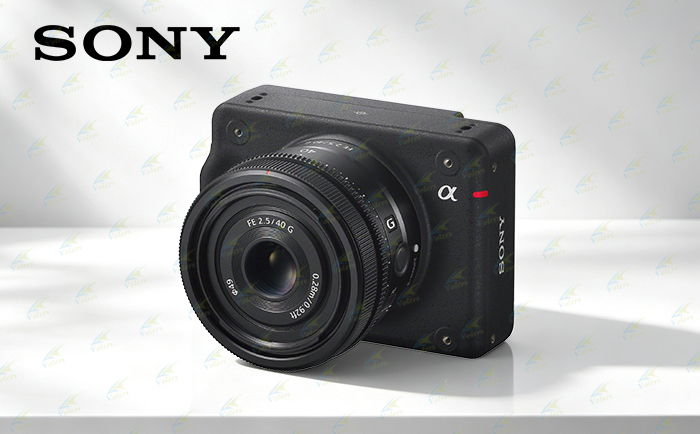
In the frontline battle of smart drug control, aerial inspection for hidden poppy cultivation has long faced industry pain points such as difficult target identification and low inspection efficiency. As a full-frame interchangeable-lens camera purpose-built by Sony for industrial scenarios, the Sony ILX-LR1 has already been validated in numerous low-altitude industrial applications, including wind turbine inspection, photovoltaic O&M, power monitoring, and urban mapping. Now, in the field of poppy inspection for prohibited cultivation eradication, it is leveraging its robust hardware performance to fundamentally reshape the operating model of aerial anti-drug inspection and become a core visual tool for improving drug-control inspection efficiency.
I. Core Industry Pain Points: Two Fatal Shortcomings of Traditional Poppy Inspection
In past manual inspection or ordinary drone inspection models, two bottlenecks have persistently been difficult to overcome:
First, insufficient identification accuracy.
Illegally cultivated poppies are mostly mixed among the ridges of ordinary crops such as corn and vegetables. Many growers even deliberately hide poppies under tree shade or in gaps within orchards. Ordinary aerial cameras do not have high enough resolution to distinguish the texture differences between poppy leaves and ordinary crops, and missed and false judgments frequently occur. The identification rate for small plants at the seedling stage has long remained low.
Second, low inspection efficiency.
Ordinary aerial equipment has a limited effective operating altitude. To achieve ground resolution sufficient for clearly identifying poppies, drones must operate at very low altitudes, and the inspection area covered in a single flight is very small. For tens of thousands of mu of contiguous farmland and large forest areas, the entire inspection operation requires large amounts of manpower and several days to complete. Efficiency simply cannot keep up with the needs of prohibited cultivation eradication.
II. Three Robust Capabilities That Address Poppy Inspection Pain Points at the Root
The Sony ILX-LR1 was designed from the outset for long-term industrial airborne scenarios. Its three core capabilities precisely target all practical requirements of poppy inspection and comprehensively fill the shortcomings of traditional inspection solutions.
1. 61-Megapixel Full-Frame Sensor: Sharp Eyes for Plant Identification
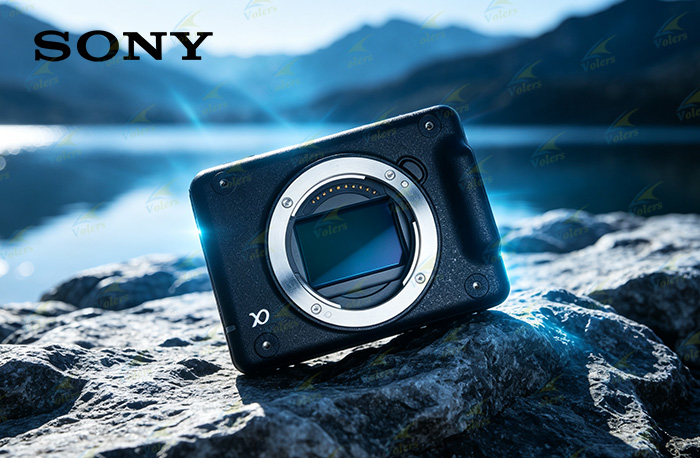
The core requirement of poppy inspection is to see every detail clearly. The Sony ILX-LR1 is equipped with a full-frame image sensor with approximately 61.0 effective megapixels. With excellent sensitivity, ultra-high resolution, and wide dynamic range, it can fully reproduce the edge contours of plant leaves, fine vein textures, and even the subtle forms on the surfaces of flowers and fruits, even under complex lighting conditions such as oblique sunlight, dappled tree shade, and backlit shadows.
The Sony ILX-LR1 supports the full Sony E-mount lens series. Operators can flexibly select lenses according to different inspection areas: wide-angle lenses for covering large areas in open plain farmland, and medium-telephoto lenses for precisely locking onto hidden locations in dense forest areas. Even a single poppy plant at the seedling stage hidden among half-meter-high crops can stand out clearly in aerial images and will not be confused with the details of surrounding ordinary vegetation. The accuracy of feature comparison and target determination is greatly improved, fundamentally avoiding missed and false judgments caused by blurred images.
2. 243-Gram Ultra-Light Body: Significantly Reducing Drone Payload Pressure
The Sony ILX-LR1 is deeply optimized for industrial airborne applications. Its body dimensions are only 100 × 74 × 42.5 mm, and its body weight is only about 243 grams—almost half the weight of an ordinary smartphone.
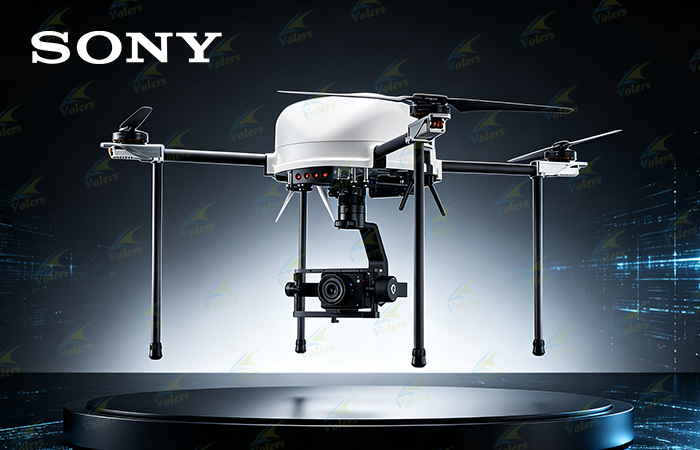
The lightweight design not only perfectly adapts to the gimbal installation requirements of multirotor and compound-wing drones, but also significantly reduces the additional payload of the drone, making the drone's flight attitude more stable and effectively reducing image shake during high-speed flight. It also significantly extends the drone's single-flight endurance, directly expanding the effective operating time of a single inspection mission and eliminating the need for frequent returns to the takeoff and landing point to change batteries, greatly improving inspection efficiency across the entire area.
3. Fully Open SDK for Deep Integration: Inspection Efficiency Increased by 8–10x
Relying on a supporting control system deeply developed based on Sony's official SDK, the ILX-LR1 can be seamlessly integrated with the drone flight platform. On the ground side, operators can remotely and in real time adjust all core shooting parameters—aperture, shutter, ISO, focus, and more—through custom software. There is no need to manually open the case to adjust the device; it can adapt at any time to shooting requirements under different lighting conditions and capture clear, qualified images on demand.
The dedicated 6-pin interface built into the Sony ILX-LR1 also supports direct power sharing with the power modules of mainstream drones, further simplifying the overall gimbal integration structure and eliminating the need for an additional independent power module. During flight inspection, the camera can stably maintain high-speed continuous shooting at approximately 3 frames per second. Each captured image is automatically associated with precise GPS coordinates for the corresponding location, eliminating the need for manual post-processing annotation of points. When a suspected poppy location is detected, its precise position can be immediately locked on the map, greatly improving the efficiency of subsequent verification and disposal and the credibility of the data.
While maintaining the same ground resolution standard, the aerial altitude of a drone equipped with the ILX-LR1 can be increased to 5–8 times that of ordinary cameras, and overall operating efficiency is directly improved by approximately 8–10 times. The efficiency advantage is particularly obvious in inspection scenarios covering large contiguous areas.
III. Beyond Prohibited Cultivation Inspection: Full-Industry Industrial Airborne Scenario Adaptability
This mature solution, validated in poppy inspection scenarios, can also be transferred to other low-altitude industrial vision scenarios:
1. During photovoltaic power station inspection, it can clearly identify micron-level microcracks on the surface of photovoltaic panels;
2. During wind turbine blade inspection, it can capture subtle cracks and paint peeling defects on blade surfaces from a long distance;
3. During urban mapping operations, a single flight can cover a larger area and obtain high-precision aerial mapping materials.
FAQ
Q: Does the Sony ILX-LR1 support video recording? Is it more suitable for video or still images?
A: It can record video, with a maximum output of 4K/60P at a resolution of 3840 × 2160. However, the core advantage of this camera is its 61-megapixel full-frame sensor. Shooting ultra-high-precision still images is what fully realizes its performance ceiling. In industrial high-precision aerial scenarios, it is more recommended to use it for still image capture. For scenarios with continuous dynamic video acquisition needs, Sony FCB series integrated camera modules are a better choice.
Q: As an officially authorized dealer of Sony (China), will our company subsequently develop a dedicated control board for the Sony ILX-LR1?
A: Yes. With 17 years of practical experience in HD video secondary development, our company is fully capable and experienced in undertaking the R&D of related supporting hardware. It will subsequently launch a dedicated control supporting solution fully adapted to the ILX-LR1, further lowering the threshold for industrial-grade integration development.